Bottom line: you're probably overcomplicating kitchen appliance maintenance
After eight years as a commercial kitchen equipment specialist, I've personally made (and documented) 12 significant mistakes that totaled roughly $15,000 in wasted budget. That's not counting the embarrassment of telling a chef their $3,200 mixer had to sit idle for a week because I ordered the wrong part.
Here's the one thing I wish someone had told me on day one: most appliance problems come from ignoring the small stuff—dishwasher detergent compatibility, fridge ventilation, mixer motor cleaning schedules. The fixes are cheap, but the mistakes are expensive. This article is my (slightly humiliating) checklist so you don't have to learn the hard way.
"I've spent $15,000 on rework, replacement parts, and rushed shipping. A $50 checklist could have saved it all."
Why you should trust my mess-ups
In my first year (2017), I spec'd a KitchenAid Commercial KSM8990 8-quart stand mixer for a high-volume bakery without checking the planetary gear ratio. The dough was too stiff, the motor overheated, and the mixer locked up mid-batch. That error cost $890 in repair plus a 1-week delay—and the bakery lost a weekend catering contract.
By 2020, I was handling dishwasher repairs for a hotel chain. I insisted on using generic detergent tablets to save money, ignoring the warning labels about low-phosphorus formulas. Result? Three KitchenAid dishwashers developed lime scale blockages in six months. The service call alone was $320 per unit (ugh). That's when I learned: not all dishwasher tablets are created equal.
Fast-forward to Q1 2024: I was called in to fix a Fisher & Paykel fridge with a red light on the water dispenser. The owner had ignored the filter replacement indicator for 18 months. The fix? A $45 filter swap and a 10-minute YouTube tutorial. But the panic and the lost perishables? Priceless. (note to self: make fridge maintenance part of every kitchen walkthrough.)
Since that third rejection, I've maintained a team checklist that has caught 47 potential errors in the past 18 months. Sometimes it's as simple as asking: "What detergent are you using?"
The real lessons, one appliance at a time
1. KitchenAid Commercial KSM8990 8-Quart Stand Mixer — don't let the specs fool you
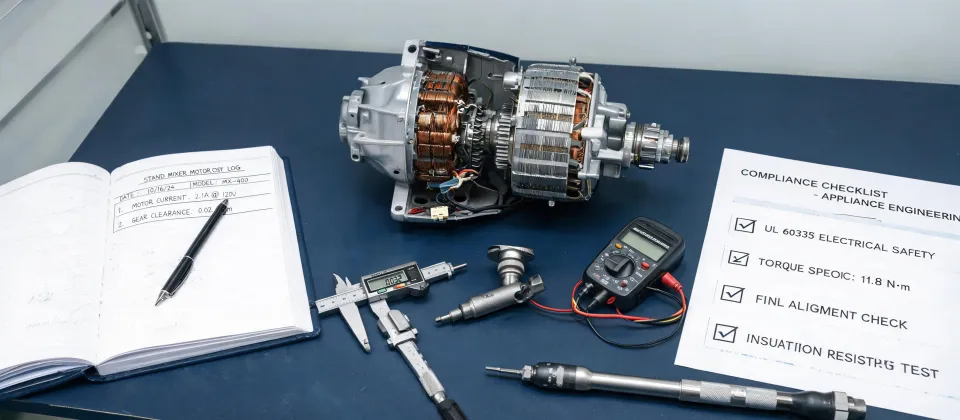
Most buyers focus on the motor wattage and bowl size, but they completely miss the motor cooling system. The KSM8990 has a fan that draws air through the back vents. If you place it too close to a wall (or let flour dust accumulate on the vents), the motor will overheat even on light duty. According to KitchenAid's official documentation, you need at least 4 inches of clearance on all sides. I found this out after my 2017 disaster.
Another oversight: the bowl lift mechanism. The KSM8990 uses a heavy-duty lift that requires periodic lubrication. Most owners skip this, and then wonder why the bowl wobbles. (mental note: include grease schedule in the checklist.)
If I could redo that first purchase, I'd add a $25 infrared thermometer and check the motor housing temperature after 10 minutes of kneading. At the time, I didn't even know that was a thing.
2. KitchenAid dishwasher repair — the Branch Basics trap
Branch Basics dishwasher tablets are fragrance-free, which sounds perfect for commercial kitchens that want to avoid scent contamination. But here's the thing: their formula is designed for soft-to-moderate water hardness. In areas with hard water (like most of the Midwest), the lack of phosphates and chelating agents means minerals deposit on the heating element. I learned this the expensive way in 2020.
"It's tempting to think all 'natural' tablets are interchangeable. But the chemistry of your water supply is a deal-breaker."
The fix? Pre-treat the water or switch to a tablet with built-in water softener for hard water. A $40 water hardness test kit can save you $1,200 in dishwasher repairs. I now include that test in my kitchen startup checklist.
Also, a quick note on KitchenAid dishwasher repair: the most common issue I see is a clogged spray arm filter. It takes 2 minutes to clean, but people ignore it because they assume the tablet will dissolve everything. (It won't.)
3. Fisher & Paykel fridge red light on water dispenser — the silent money pit
I got a panicked call from a restaurant owner: "The red light is blinking on the water dispenser, and the ice maker stopped working." They'd been pressing the reset button for weeks. The red light means the water filter is overdue. The Fisher & Paykel manual says replace every 6 months. They were at month 22.
Replacing the filter fixed the light and the ice maker within 30 minutes. But the real cost? The fridge had been running at higher pressure to compensate, which strained the inlet valve. That repair cost $280.
So if you see a red light on your Fisher & Paykel fridge (or any fridge with a dispenser), don't ignore it. The question everyone asks is "how do I reset the light?" The question they should ask is "when was the last time I changed the filter?"
4. How to make a mini fridge colder — the counterintuitive trick
I once bought a cheap mini fridge for a break room and thought I could just crank the thermostat dial to "coldest." Instead, the freezer compartment iced over, blocking airflow, and the fridge section stayed at 50°F (too warm for dairy). The mistake: mini fridges work best when the evaporator fan can circulate air freely. Overpacking the fridge or blocking the rear vents kills performance.
The real fix: check the condenser coil (usually on the back). If it's dusty, vacuum it. Then set the dial to medium and wait 24 hours. I've seen a 15°F drop just from cleaning the coil. (finally!)
Also, don't put hot food inside—that's obvious, but people do it. And give it room on the sides: at least 2 inches of clearance for heat dissipation.
What doesn't work
These are the boundary conditions—cases where my advice doesn't apply or needs adjustment:
- The KSM8990 cooling tip works for commercial kitchens, but if you're a home baker with occasional use, the clearance can be less. Just don't run it for 30 minutes straight without a break.
- Branch Basics tablets are fine in soft water areas. Test your water before switching.
- Fisher & Paykel red light—some newer models have a self-cleaning filter indicator; check the manual.
- Mini fridge cooling—if the compressor is failing, cleaning won't help. Listen for buzzing or clicking sounds.
My prevention checklist (the one I wish I had from day 1)
- Test water hardness before choosing detergent.
- Measure appliance clearance (4" for mixers, 2" for mini fridges).
- Schedule filter changes (fridge) and motor lubrication (mixer) on a calendar.
- Check spray arm filters on dishwashers monthly.
- Keep an infrared thermometer handy for motor temperature monitoring.
Five minutes of verification beats five days of correction. I've learned that the hard way—so you don't have to.

Ask for sourcing context