I’ll say it plainly: The cheapest purchase on an order form is often the most expensive number on the annual report. That isn’t a slogan. It’s a pattern I’ve watched repeat for five years.
I’m an office administrator for a 120-person company. I manage all the purchasing for our three locations—roughly $180,000 a year across 8 main vendors. I report to operations and finance. That means I buy the boring stuff: paper towels, toner, fridge repairs. And sometimes the fun stuff: stand mixers, pastry blenders, small hair straighteners.
When I took over purchasing in 2020, I thought the job was simple. Find the lowest quote. Stay under budget. Then I learned what happens when a cheap product fails.
The Replacement Math
The moment that changed my mind wasn’t a big capital purchase. It was a six-dollar pastry blender.
In March 2023, I bought a plastic pastry blender from a local discount store because the price was $6. It felt fine in the store. It snapped in the dish bin within three weeks. I then bought the KitchenAid pastry blender for $28. That was the moment I learned the phrase “buy cheap, buy twice.” Actually, the phrase should be “buy cheap, pay three times.” The $6 item worked for a few weeks, then took up time, then required a second order. The KitchenAid pastry blender has been in the drawer since 2023. No issues.
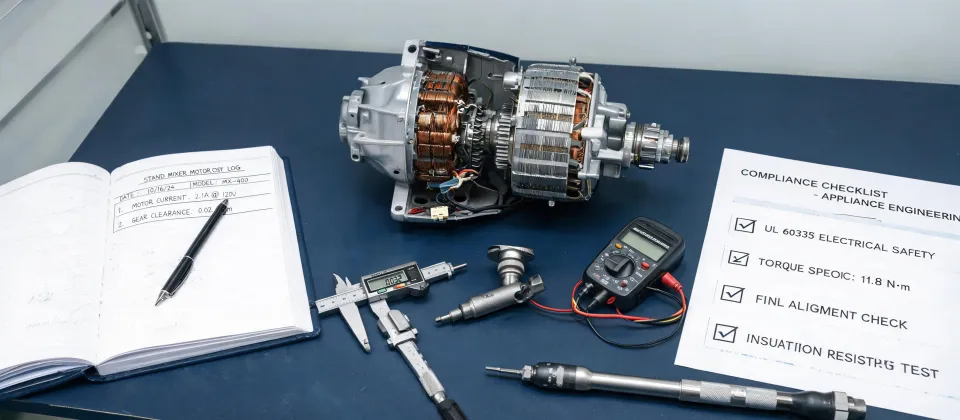
Same logic applies to big kitchen gear. We bought a cheaper stand mixer in 2021 because the KitchenAid model felt like an indulgence. The motor failed after 12 uses. We replaced it with a KitchenAid. That one has worked for over two years. If I had bought the KitchenAid first, I would have saved about $140. I know that because I went back and calculated it. That’s what I do now.
The Rebate That Wasn’t
I don’t want to sound like I’m against rebates. I’m against letting a rebate make the decision.
In late 2024, we needed a new electric water heater. The building manager found a model with a big electric water heater rebate. The after-rebate price looked better than every other option. I almost clicked order. But I checked the fine print first.
According to the ENERGY STAR rebate finder (energystar.gov, as of January 2025), rebate amounts vary by utility and zip code. In our case, the cheapest model didn’t qualify for the highest rebate tier. It also needed a different vent adapter and a new shutoff valve. Once I added installation and parts, the “cheap” option was $420 more than a slightly higher-efficiency model that qualified for a bigger rebate. The second model had a higher base price. The total installed cost was lower. That’s the number that matters.
Three things to check before any rebate: the actual price before rebate, the installation cost, and the eligibility requirements. In that order.
Repair First, Replace Second
Our office kitchen has a KitchenAid refrigerator. In July 2024, it stopped cooling. The first suggestion from the team was to replace it. The replacement quote I got was $1,600. I got a repair quote instead: $95 diagnostic fee and $225 for the part and labor. Total: $320. The fridge has worked fine ever since.
That is why I don’t automatically search for “KitchenAid fridge repair” and then panic. A repair request is not a death sentence. It’s a data point.
The same logic applies to small gadgets. A few months ago, a coworker asked, “Why won't my water flosser work?” The cheap answer was to order another one. The better answer was to look up common causes. In that case, the nozzle was clogged with mineral deposits. Soaking it in vinegar fixed it in about 20 minutes. The total cost was zero.
Small Items, Same Rule
People assume big purchases need careful thought and small purchases don’t. That’s backwards. Small purchases are where the hidden costs stack up.
Example: a small hair straightener. We keep a few for employees who travel or need a quick touch-up before a client meeting. I ordered an $11 one because it was cheap. It had one heat setting. It heated unevenly, and a visitor ended up with a red mark on her ear. We threw it away. I replaced it with a compact straightener with adjustable temperature. The replacement cost $34. The first one wasn’t a bargain. It was a liability.
Same with the water flosser. A low-end unit stopped working after four months. Instead of buying another one, I asked why. The answer was hard water buildup. A simple descale fixed it. But I only got that answer because I stopped and checked. If I’d just reordered the same product, I’d be on the third unit by now.
But What If Budget Is Tight?
Here’s the objection I always hear: “Not everyone can afford the better option.” That’s fair. Budget constraints are real, and I’ve made cheap purchases because the checkbook said so.
But I’m not saying buy luxury every time. I’m saying buy enough to avoid the failure. That might be the cheap option. It might be the middle option. It might be a used item or a refurbished item. The point is to evaluate total cost: purchase price, installation, maintenance, repair probability, and the headache of replacing it.
In my experience managing this budget since 2020, the lowest quote has cost us more in at least half the cases. I can’t give you a precise percentage because I’ve never built that spreadsheet (mental note: I really should). But the pattern is consistent.
There’s also a second objection: “You got lucky with the repair.” Maybe. Honestly, I don’t fully understand why some products fail quickly and others last forever. My best guess is quality control varies from batch to batch. That’s why I now use the “half or newer” rule: repair if the repair cost is less than half the replacement price and the unit is under ten years old. That’s not official policy. It’s just a benchmark.
I can only speak to my context. I run a purchasing process for a 120-person office, not a commercial kitchen. If your mixer runs for eight hours a day, you probably need a heavy-duty unit with a service contract. If you’re buying a water flosser for a single person, the cheap one might be enough. The math is specific.
Bottom Line
The next time you see a low price, ask yourself a different question: What happens when this fails? If the answer is “we’ll buy another one,” you’ve already accepted the real cost. You just haven’t put it on the same invoice.
I still buy cheap things. I still buy expensive things. I try not to buy things that waste my time. The cheapest option rarely saves time, and time is the one line item nobody tracks.
That’s why I say the lowest price is a trap. The best price is the one that includes the cost of being wrong.

Ask for sourcing context