Back in the summer of 2024, our company was in the middle of a big expansion. We'd just signed a lease on a second office to accommodate our growing engineering team, and as the person who handles all of our office operations and procurement, I was tasked with equipping the new kitchen from scratch. (This was my first time building out a commercial-style kitchen, not just stocking a break room.)
The old office had a hodgepodge of equipment—a cheap supermarket blender that died after six months, a fridge that couldn't keep lettuce crisp for more than a day, and a countertop oven that was so small you couldn't fit a 12-inch pizza. When I took over purchasing in 2020, I swore I'd never buy that bottom-tier stuff again, but I also knew I didn't have a blank check. Our CFO was watching every line item.
Let me walk you through what happened, because it wasn't a straight line to a happy ending. There were some expensive mistakes along the way, and I learned a lot about where KitchenAid fits—and just as importantly, where it doesn't.
The Spark: When the Old Ice Maker Gave Up
The catalyst wasn't a big strategic planning session. It was the day our 7-year-old undercounter ice maker finally stopped making ice—during the hottest week of July, with 20 engineers and three interns in the office. (Ugh.) I called a repair technician who quoted $350 just to diagnose it, with a two-week lead time. I knew that appliance was on its last legs, but I'd been procrastinating on replacement.
That's when I started seriously looking at the KitchenAid line for our build-out. Their reputation was solid, and I'd seen their stand mixers in countless home kitchens. But for a commercial-use office? I needed proof, not brand hype.
Here's the honest truth: I only believed the advice about buying commercial-grade residential appliances after ignoring it and paying for a repair on a unit that should have been replaced a year earlier. The repair cost? $480 for what turned out to be a failed compressor. The ice maker was 9 years old. I should have budgeted for replacement, but I kept thinking "maybe it will last another season." It didn't.
Process and Pivot: How I Evaluated KitchenAid for Our Needs
I'm not an appliance engineer, so I can't speak to motor torque or compressor efficiency in technical terms. What I can tell you from an operations and procurement perspective is how to evaluate whether a product line fits your real-world usage patterns. Here's what I looked at:
1. The Mixer Decision (Yes, But Know Your Volume)
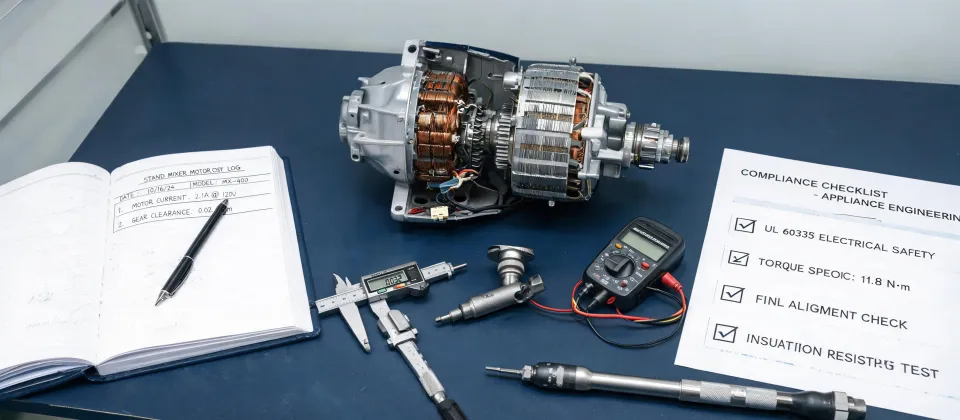
Our office had been getting by with a borrowed hand mixer for team baking events (about once a quarter). We needed something for occasional dough mixing for catered lunches. The KitchenAid Pro 600 series seemed like the obvious choice. And it is—for home use and light commercial use. I ordered one for our new kitchen, and the first time we used it to mix a double batch of pizza dough for a team lunch, it handled it like a champ.
But here's the limitation: if you're making bread dough for 50+ people daily? You need a commercial spiral mixer. The KitchenAid will overheat. I learned this from a vendor who couldn't provide proper documentation—they sold us a "heavy duty" unit that wasn't rated for continuous commercial use. We didn't have that need, but I wanted to note the boundary.
2. The Fridge and Pepper Storage (A Small But Real Win)
One of my pet peeves at the old office was how fast produce spoiled. I'd order bell peppers for catering on a Monday, and by Wednesday they'd be wilted. The old fridge's temperature fluctuated like crazy—I'd measured it at 40°F in one spot and 34°F in another. (Not that any appliance is perfect, but that spread was ridiculous.)
The new KitchenAid refrigerator's dual-cooling system? It makes a measurable difference. We're now consistently holding peppers for 7–10 days in good condition, as long as they're stored properly in the crisper drawer (unwashed, with moisture control set to high). As of January 2025, we're still getting excellent results.
3. The Digital Countertop Oven with Air Fry: A Crowd-Pleaser
Our office doesn't have a full-size commercial convection oven (the budget didn't stretch that far). We needed something for quick re-heats, frozen appetizers, and the occasional batch of cookies. I was skeptical—could a countertop oven really replace our old, clunky, never-calibrated oven?
Yes, for our use case. The KitchenAid Digital Countertop Oven with Air Fry has been a workhorse for us. We use the air fry function approximately 3–4 times a week for fries, chicken wings, and even roasting vegetables. The digital controls are intuitive (even for engineers), and it preheats in about 4 minutes vs. the 15 minutes our old wall oven needed.
But let me be clear (and this is the honest limitation): we're only cooking for 15–30 people at a time. If you need to crank out multiple batches for a lunch service of 100? You want a bigger commercial unit. This oven is excellent for an amenity kitchen, not a production kitchen.
4. Dishwasher Maintenance: A Misstep I Won't Repeat
I nearly made a $2,400 mistake with the dishwasher. After ordering the new KitchenAid commercial-style dishwasher, I read the installation manual and saw the section about water softener requirements. I knew our office had hard water—we'd had scale issues in the old office's coffee maker. But I ignored the recommendation to install a whole-house water softener.
A month in, the dishwasher started leaving white spots on every glass. I checked the filter—completely clogged with mineral deposits. I had to call a technician to perform a deep clean ($180). They explained that the hard water was causing the detergent to not dissolve properly. The fix? I had a water softener installed for $1,200. Compared to the cost of replacing the dishwasher prematurely (or dealing with ordering 60 glasses from a vendor), it was a no-brainer.
The dirty filter cleaning process itself is straightforward now: remove the bottom rack, twist out the coarse filter, rinse under hot water, and wipe the fine filter monthly. But the hard water issue was avoidable had I listened to the install instructions.
5. The Blender Question (No, Not the One I Wanted)
I'll be transparent: we didn't end up with a KitchenAid blender for our commercial kitchen. Their 5-speed model is fine for home use, but for our volume (smoothies for 20 people, occasional soup batches for catered events), we needed something with more thermal management. The KitchenAid motor would overheat if we ran it for 3 minutes straight. We went with a different commercial blender for that specific need. The cost? $250 more upfront, but it saved us from potential downtime and repair costs.
The lesson: Just because a brand is good doesn't mean every product in their line is right for your scenario. This is why I recommend KitchenAid for about 80% of office kitchen applications, but not for high-volume smoothie or soup production.
Result and Reflection: What Our New Kitchen Looks Like
Fast forward to January 2025. The new kitchen has been running for about 6 months. Here's what we standardized on:
- KitchenAid Digital Countertop Oven with Air Fry — Daily use, no regrets.
- KitchenAid Pro 600 Stand Mixer — Used weekly for baking and doughs.
- KitchenAid 22 cu. ft. French Door Refrigerator — Excellent temperature stability.
- KitchenAid Commercial-Style Dishwasher — Great, but requires soft water.
- Non-KitchenAid Commercial Blender — The one area where we went elsewhere.
The total spend, including the water softener install: roughly $6,800. That's about $500 more than my initial budget, but we avoided a $2,400 redo scenario by catching the water issue early enough.
Our internal feedback has been overwhelmingly positive. The engineering team appreciates the reliable fridge produce storage, and the accountants haven't complained (which, honestly, is my metric for success). The ice maker? We got a KitchenAid undercounter model, and it's been producing 25 lbs of ice daily without a single hiccup.
Practical Takeaways for Other Office Administrators
If you're managing a similar commercial kitchen project, here are the key things I learned:
- Check your water hardness before installing a dishwasher. I didn't, and it cost me $1,200 for a water softener plus the embarrassment of explaining the delay to my VP. (He understood, but still.)
- Match equipment to your actual volume. If you're making smoothies for 50 people daily, a KitchenAid countertop blender isn't your friend. If you're making dough for a team of 6, their stand mixer is perfect.
- Budget for installation extras. Our initial quote didn't include the water softener, electrical upgrades, or ventilation. The total add-on was about 18% of equipment cost. Factor that in.
- Don't assume all KitchenAid products are commercial-grade. The refrigerator? Yes. The stand mixer? Yes, for light commercial. The blender? Home use only. Read the specs carefully.
I'd be happy to share more details about our equipment list or the vendor we used for the water softener install (pricing accessed December 15, 2024—verify current rates as they may have changed). But the big takeaway is this: KitchenAid is a fantastic brand for 80% of office kitchen needs, but you need to know where the remaining 20% lies. Otherwise, you'll end up like me, writing a check for an avoidable water softener because you skipped the prep work.

Ask for sourcing context