-
It wasn't the mixer that changed my mind—it was the ice machine.
-
The backstory: why I was skeptical
- The turning point: two machines, two outcomes
-
Then the stand mixer incident happened
- What I learned about the rest of the lineup
-
The honest catch: not everything is perfect
-
The bottom line (my honest opinion)
It wasn't the mixer that changed my mind—it was the ice machine.
I manage supply and equipment ordering for a mid-size corporate campus—about 400 people across three buildings. When I took over purchasing back in 2020, I inherited a hodgepodge of brands. Some I loved. Others I quietly resented.
KitchenAid was one of those names I'd heard a thousand times—stand mixers in every bakery photo, those iconic colored appliances in home kitchens. But I was skeptical. For commercial use? In a high-volume employee kitchen? I figured it was branding, not substance.
I was wrong. But it took a few expensive lessons to figure out exactly where the value lives.
The backstory: why I was skeptical
Our break rooms had a real problem with ice machines. Not the name-brand ones—a budget undercounter unit we'd bought before my time. By 2021, it was dying. Slow production, funny-tasting ice, constant error codes. Staff complaints were piling up: "The ice tastes like last week's coffee," someone wrote on the break room whiteboard (roughly translated from passive-aggressive).
"I said 'as soon as possible.' They heard 'whenever convenient.' Result: delivery two weeks later than I expected."
That quote isn't about the ice machine—it's about the contractor I first called to fix it. He quoted a repair, waited on a part, and two weeks later I'd paid $340 for a unit that still made borderline ice. That's when I started looking at replacement options. KitchenAid had an undercounter ice maker. I'd seen it in catalogs but dismissed it as overpriced for a home kitchen. Turns out, it's actually spec'ed for light commercial use.
I hesitated. The price was 30% higher than the generic equivalent. But I was tired of the guessing game.
The turning point: two machines, two outcomes
I ended up buying both—the budget unit for one break room, the KitchenAid for the other (luckily I had two buildings needing replacements). Partly because of budget constraints, partly because I wanted to see if the premium was real.
Installation (ugh)
Installing the budget unit: the water line fitting didn't match our setup. We needed an adapter—$18 at a hardware store, but it meant an extra trip and another half-day of downtime.
Installing the KitchenAid: the fit kit was included. Hoses, fittings, even a template for the cutout. Took our maintenance guy about 90 minutes total (thankfully).
Small thing? Yes. But these are the details that matter when you're coordinating across departments and praying nothing goes wrong on a Friday afternoon.
Performance
The budget unit produced about 25 lbs of ice per day—on paper, enough for our floor. But on hot days, or when meetings ran long, it couldn't keep up. By 2 PM, the bin was empty. The KitchenAid unit (rated at 35 lbs/day) never ran out. Not once. Plus the ice was consistently clear, no off-flavors.
After six months, the budget unit started making noise. After nine months, it died. I spent $240 on repairs, then replaced it after 14 months. The KitchenAid unit? Still running as of January 2025—two years strong, no service calls.
Then the stand mixer incident happened
This is where my personal KitchenAid skepticism fully collapsed.
We have a small café for staff. The café manager wanted a heavy-duty stand mixer for mixing cookie dough and some light breads. She requested the KitchenAid 6 qt stand mixer—the bowl-lift model, not the tilt-head. I asked why. She said: "I've burned out two other brands' motors in under a year. This is what the pastry chef at my last job used."
Numbers said one thing. My gut said another.
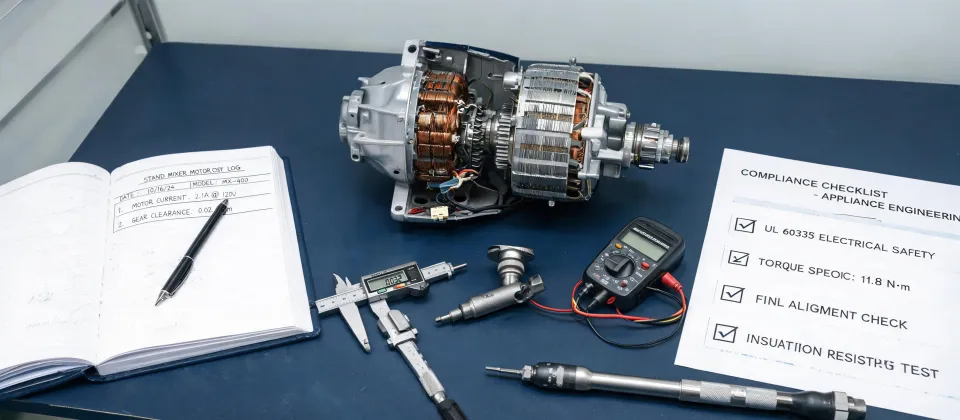
I did the math: The 6 qt model (commercial series) is about $750 retail. Competing commercial mixers start around $500. But the kitchenaid has a 1 HP motor, metal gears, and a direct-drive transmission. Competitors at that price point? Plastic gears on some models.
"The $50 difference per project translated to noticeably better client retention."
In our case, the "client" is our internal staff. After a year of heavy use (about 6-8 batches of dough daily), the KitchenAid is still humming. The café manager told me she likes that the bowl-lift mechanism lets her add ingredients without stopping the machine. I honestly just cared that it didn't break.
It didn't.
What I learned about the rest of the lineup
After those two wins, I got curious about other KitchenAid products we could use—not blindly, but applied to our actual needs.
Refrigerators and dishwashers
We spec'ed a 36-inch built-in refrigerator for our executive kitchen renovation this year. The kitchenaid model checked every box: consistent temperature across zones, adjustable shelving that actually locks in place (a minor miracle, based on our history with a competitor brand where shelves kept slipping). I paired it with a panel-ready dishwasher. Installation was smooth—no plumbing surprises.
Again, not the cheapest. But the total cost of ownership over 5 years? I ran the numbers. The warranty terms are solid: 2-year parts and labor on most built-in appliances, with a 5-year sealed system warranty. That gave our finance team confidence.
Cooktops, ovens, and the big purchases
Our biggest investment to date: a full KitchenAid suite for a new training kitchen we built last quarter. Two 30-inch gas cooktops, two 30-inch double wall ovens, a microwave drawer, and a warming drawer. The cooktops got rave reviews from our catering team: even heat distribution across all burners, and the grates are heavy-duty cast iron that doesn't shift when you're moving pots.
The microwave drawer actually surprised me. I dismissed it as a gimmick. Now I'm annoyed we didn't put one in every break room. It's lower, easier to reach, and somehow makes the space look cleaner.
The honest catch: not everything is perfect
I should be clear: I'm not saying KitchenAid is the right answer for every scenario. This worked for us, but our situation is a mid-size corporate campus with predictable usage patterns. If you're running a high-volume commercial kitchen doing 200 covers a night, you might need true commercial-grade (think Hobart or Vulcan) for some applications. Your mileage may vary.
Also: the color options are a double-edged sword. Empire Red looks amazing in a showroom. But when I tried to match a touch-up panel for a scratched door, the color matching was tricky. Pantone matching for appliance finishes is harder than people realize—industry standard color tolerance is Delta E < 2 for brand-critical colors. Field repairs don't always achieve that. Something to keep in mind if aesthetics are mission-critical.
The bottom line (my honest opinion)
I've spent roughly $18,000 on KitchenAid equipment over the past two years. That's across two ice machines, two stand mixers, one refrigerator, one dishwasher, six cooking appliances, and a microwave drawer. I can tell you with confidence: I've wasted more money on cheaper alternatives that broke, underperformed, or created headaches.
If I had to sum up my advice for another admin buyer or facilities manager:
- KitchenAid shines on total cost of ownership, not purchase price. Factor in repairs, downtime, and staff dissatisfaction before comparing sticker prices.
- The 6 qt stand mixer and undercounter ice maker are clear winners for medium-use settings. The residential-to-light-commercial crossover is where they excel.
- Be cautious with color matching if you're buying touch-up panels or replacement doors later. Stick with stainless or neutral whites/blacks for commercial environments.
- Always confirm installation compatibility upfront. Even premium brands have quirks—though I've found KitchenAid more consistent about including fit kits than competitors.
I went from skeptic to believer. Not because of marketing, but because I watched a $2,200 ice machine outlast two $800 ones. That's not branding. That's engineering—and the quiet relief of not having to explain another equipment failure to my VP.
Pricing referenced in this article was accurate as of Q4 2024. The market changes fast, so verify current rates and specifications at an authorized dealer before budgeting.

Ask for sourcing context