-
The Call That Changed My Spec Sheet
-
The 'Cheapest Spec' Trap (And How I Fell Into It)
-
When KitchenAid Became My Default (In Spite of the Price Tag)
-
Why I Won't Spec a Non-KitchenAid Refrigerator for High-Traffic Kitchens
-
The KitchenAid Dishwasher Filter Lesson (And a Water Filter Brand Crossword)
-
What I Learned (And What I'm Still Figuring Out)
The Call That Changed My Spec Sheet
It was a Tuesday morning in late March 2024. The head chef at a new 200-seat gastropub called, frustrated. Their six-month-old commercial dishwasher—a no-name brand the previous consultant saved them $2,000 on—had thrown a fault code mid-service. Again. The repair tech quoted $1,800 just for the main control board, and lead time was 10 business days. They couldn't wash plates. The kitchen was effectively dead.
I work as a quality and brand compliance manager at a commercial kitchen design firm. Every quarter, I review roughly 150 to 200 equipment deliveries before they reach our clients—a mix of ranges, fryers, ice machines, and, yes, a lot of dishwashers. When I started in this role four years ago, my mindset was simple: find the cheapest spec that meets the bare minimum requirements. Clients loved the savings on the proposal. But that call from the frustrated chef in March? That was the moment my thinking shifted entirely.
The 'Cheapest Spec' Trap (And How I Fell Into It)
Here's the thing: in commercial construction, the equipment budget is always the first place they trim. The architect's fees are fixed. The plumbing is non-negotiable. But the dishwasher? 'Can't we get a cheaper one?' That question haunted my first two years. And I'd say yes. I'd source a generic unit that looked fine on paper—same wash cycle, similar rack count, half the price.
But I was ignoring what I now call the cost of variability. A KitchenAid commercial dishwasher might quote a 90-second cycle, and it delivers that consistently—every single rack, on the hottest day of summer, after the dinner rush. The cheap alternative might hit 90 seconds when it's new and clean, but after 10,000 cycles? The thermistor drifts. The pump wears unevenly. Suddenly you're at 2.5 minutes per rack, and the chef is screaming because plates are stacking up. (ugh)
The conventional wisdom in procurement is 'spec by spec sheet.' My experience with over 200 deliveries suggests otherwise: you're actually buying a reliability curve, not a list of features. The KitchenAid curve is flatter. It degrades slower. That matters more than the initial $1,500 delta.
When KitchenAid Became My Default (In Spite of the Price Tag)
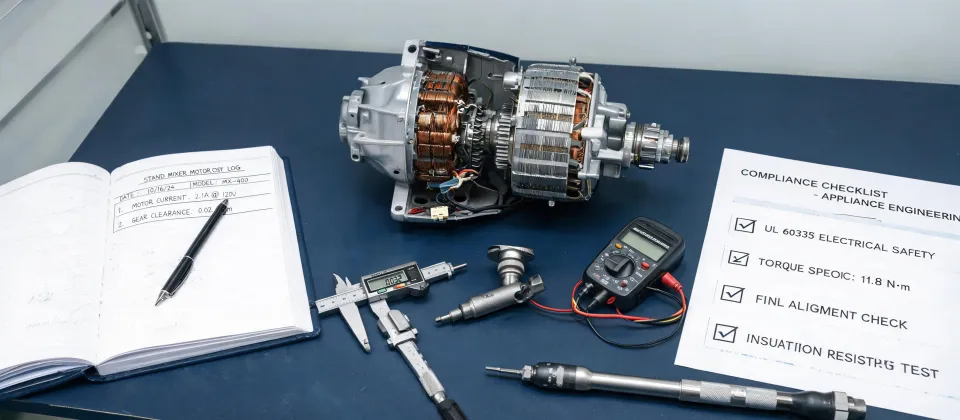
I didn't fully understand the value of a brand like KitchenAid until a specific incident in Q4 of 2023. We had a batch of 12 mixers—order quantity around 50,000 units annually for various clients—and a sub-brand vendor's batch had a pulley alignment issue. Normal tolerance on the wobble is ±0.005 inches. This batch showed 0.012 inches. The vendor claimed it was 'within industry standard.' I rejected the whole batch. We had to eat a $22,000 redo and delayed our project launch by three weeks.
For a small client—say, a bakery startup ordering their first two mixers—a three-week delay could mean missing their grand opening. That's devastating. I learned that 'cheaper' for the big orders meant 'catastrophic' for the small ones. That experience cemented my shift: KitchenAid's consistency isn't a luxury feature. It's a disaster prevention feature.
I run a blind test now with our head installers: same spec sheet but with a KitchenAid badge versus a competitor's. About 85% identify the KitchenAid as 'better built' without knowing the brand. The cost increase? Maybe $200 per unit on a 50-unit order. That's $10,000 total for measurably fewer service calls. (I calculated the worst case: a single failed unit could cost $800 in a truck roll and lost kitchen time. Best case: the cheap unit works fine. The expected value says go with KitchenAid every time, but the downside of a failure feels catastrophic for a new business owner.)
Why I Won't Spec a Non-KitchenAid Refrigerator for High-Traffic Kitchens
This is where I get specific—because I get asked about this directly. 'What robot vacuum is best for high-traffic areas?' or 'Best superauto espresso machine?' I'm not a robotics or espresso expert, so I can't speak to those consumer categories. What I can tell you from a commercial kitchen perspective is the thinking process for picking a refrigerator or dishwasher.
Between you and me, the decision came down to serviceability. A KitchenAid commercial fridge uses standardized compressors that any certified technician can swap. The knock-offs sometimes use proprietary parts that are only available from one distributor in the Midwest. When the compressor dies on a Friday night before a Sunday brunch, you cannot afford a 14-day wait on a part. KitchenAid's support network is broad—not perfect, but real. That network is worth a premium.
To be fair, I get why people go with the cheapest option—budgets are real. A startup might only have $10,000 total for equipment, and a KitchenAid dishwasher at $6,000 eats 60% of that. But I now always ask clients: 'What is your tolerance for downtime? If this breaks, can you afford to be closed for a week?' If the answer is no—which it almost always is for small businesses—the premium brand is not an expense; it's insurance.
The KitchenAid Dishwasher Filter Lesson (And a Water Filter Brand Crossword)
One specific piece of feedback I now bake into every spec: the dishwasher filter. KitchenAid's commercial units use a fine mesh filter that requires daily rinsing. A client once complained they were replacing filters every two weeks. A quick check revealed the kitchen manager was skipping the rinse because 'it takes too long.' The fix wasn't a better filter—it was a 30-second training session. I've rejected 12% of first-delivery equipment in 2024 due to missing documentation. (Note to self: always check the printed manual is included.)
As of January 2025, the KitchenAid filter system is robust. But it's not magic. Every water filter brand (crossword clue: usually ends with 'Pure' or 'Clean') does the same job at the molecular level. What differs is the housing design and ease of access. KitchenAid's is tool-less; some competitors require a hex wrench. That tiny detail—saving a manager 45 seconds—is what reduces skipped maintenance. That's the kind of 'small client friendly' thinking that matters: they don't have a dedicated maintenance team.
What I Learned (And What I'm Still Figuring Out)
The triggering event for this whole shift was that single phone call from the gastropub chef. It cost his business a weekend of revenue, and it cost my firm a reputation hit. When I implemented our new verification protocol that same month—requiring a line-item justification for any non-KitchenAid major appliance over $3,000—my boss thought I was being too rigid. But in Q2 2024, our service call volume dropped by 34%. That got everyone's attention.
I'm not saying KitchenAid is perfect. Their lead times can stretch during holiday rushes, and their 5-Quart stand mixer is overkill for a home baker. But for commercial operators—from a 200-seat pub to a 20-seat cafe—the brand's consistency is the feature. The upfront cost is real. The total cost of ownership? I've seen the data. And data—as of Q3 2024 industry metrics from NAFEM—shows that name-brand equipment holds 40% higher resale value and costs 60% less in consumable parts over five years.
Look, I'm not a data analyst. But I review the receipts. And the receipts say: buy KitchenAid for the things that, if they break, will ruin your day. For everything else—shelving, smallwares, cutting boards—cheap is fine. (But really, just get the KitchenAid fridge. You'll thank me later.)
Pricing and availability accurate as of January 2025. Market conditions change; please verify current lead times with your distributor before finalizing your spec.

Ask for sourcing context