Torque and motor life
Stand mixers, blenders, hand mixers and pumps are assessed for load stability, bearing noise, heat rise and speed drift. Reports translate lab measurements into buyer-friendly pass criteria.
The Kitchenaid engineering lab supports sourcing decisions with structured validation rather than informal sample impressions. Countertop appliances are checked for torque, heat rise, speed stability and food-contact surfaces. Dishwashers are reviewed for pump endurance, leakage, filtration and water consumption. Refrigeration projects are evaluated through compressor behavior, insulation consistency, door seal performance and lower-GWP refrigerant planning. Cooking appliances, water treatment units and laundry programs receive category-specific checks before procurement teams commit to tooling or mass production.
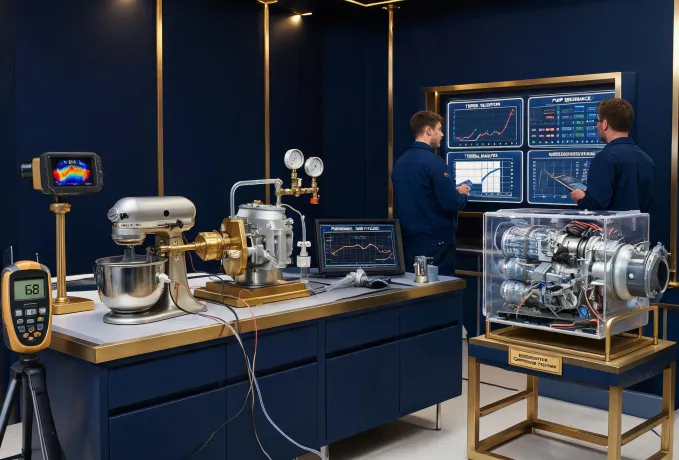
Stand mixers, blenders, hand mixers and pumps are assessed for load stability, bearing noise, heat rise and speed drift. Reports translate lab measurements into buyer-friendly pass criteria.
Dishwashers, filters and water-connected appliances are checked for leakage, flow restriction, pump endurance, valve behavior and service access.
Refrigerators and beverage coolers are examined for compressor efficiency, cabinet insulation, door gasket consistency, thermostat accuracy and refrigerant transition risk.
Drop sequence, vibration, carton compression, barcode placement and accessory restraint methods are reviewed for ecommerce and retail distribution.
Engineering evidence is useful only when it changes decisions. If a buyer requests a new finish that affects heat behavior, a carton change that weakens corner protection, or an accessory bundle that changes weight distribution, the lab can review the change before production documents are frozen. This keeps design flexibility while reducing the hidden cost of late corrections.
The lab also helps commercial teams avoid misleading comparisons. Two appliances may share a similar outside shape while using different motor grades, insulation density, valve assemblies, PCB protection, food-contact plastics or carton structures. Kitchenaid records these differences in plain project language so sourcing teams can compare total launch risk, not just unit price. When evidence is incomplete, the lab marks the gap and recommends the next sample, test or supplier declaration needed before approval.
Send your category, test concern and target market. We will respond with the validation path that matters most for that appliance family.
Ask the lab team